DISCUSSION QUESTION:

As most of you are aware, The President’sUniversal Health Care efforts resulted in what is commonly referred to as “OBAMA-Care” which is now in place and currently a very hot issue ……sparking unyielding controversy among the U.S. citizenry. This insurmountable attention and debate is centered around:

1. Individual Rights

2. True Capitalism /Free Enterprise? A new Capitalism? Is it Working?

3. The “Haves” and the “Have-not’s”

4. Too Much Government Regulation

5. Unfair Distribution of Wealth

6. Unethical practices

7. Corporations rule!

8. Shrinking Middle Class

9. Moral and Social Responsibility

10. Don’t forget to include the Donald Trump factor/impact.

DISCUSSION QUESTION:

All students must explain and elaborate on each major provision of “OBAMA-Care”. In addition, discuss the pro’s and con’s of this piece of historic legislation. Give a detailed explanations to support you position and be prepared to adequately defend your choice in response to your classmates’ opposition. I will be closely monitoring this forum to determine a grade scale for this assignment based your interactions. I expect debates, concessions, agreements, etc.
Hazard Vulnerability Analysis

  • Students should go to https://www.calhospitalprepare.org/hazard-vulnerability-analysis. (Links to an external site.)
  • (Links to an external site.)You MUST download the “Hazard Vulnerability Analysis Tool” and “Instruction Sheet”. Then open this file in Excel – then conduct a Hazard Vulnerability Analysis using the tool for your home or work environment and score it making an educated guess. The spreadsheet format will automatically calculate the risk impact for the student. Using the information from the analysis tool, students should select 5 events from the tool that indicate they are at a high risk. For these 5 events (e.g., power outage, hurricane), the students should determine how they can better prepare for this event to mitigate the impact. As an example, for a prolonged power outage at their home – they would need to have flashlights with extra batteries or a generator, a back-up source, etc.

100 words in response to the questions and a 100-word minimum critical response to 1 classmate’s post

To further your thinking about the assigned readings regarding institutional corrections (Chapter 11), a discussion prompt is provided below. First, compose a minimum of 100 words in response to the questions. Second, save the work to your hard drive, and then, post your response here in Canvas. Next, read the responses provided by your classmates and compose a 100-word minimum critical response to 1 classmate’s post. (I will provide you with the classmate’s post right-after you kindly provide my the answer because it will be visible after I post my answer)

Finally, if you pull additional information from a source (internet, book, article, journal article) to develop your response, please be sure to cite it appropriately in APA format. Below is an example to follow for a journal article. This includes the authors’ names, year of publication, title of the article, the name of the journal in italics, the volume number of the journal in italics, and the issue number in parentheses, followed by the page number range:

Solitary confinement involves locking prisoners behind steel doors for 22 to 24 hours a day. It often goes by a variety of names including isolation, SHU (special housing units), administrative segregation, supermax prisons, the hole, MCU (management control units), CMU (communications management units), STGMU (security threat group management units), voluntary or involuntary protective custody, special needs units, or permanent lockdown.

Answer, is solitary confinement a violation of an individual’s constitutional rights? Is this a policy that makes sense? Why or why not? And, if not solitary confinement, then what alternative can be used?

Journal article example:

Sampson, R. J., & Laub, J. H. (2005). A life-course view of the development of crime. The Annals of the American Academy of Political and Social Science, 602(1), 12-45.

Web Document or Report example:

Kaste, M. (January, 2016). California cops frustrated with “Catch-and-Release” crime fighting.Retrieved from: https://www.npr.org/2016/01/22/463210910/california-cops-frustrated-with-catch-and-release-crime-fightin (Links to an external site.)Links to an external site.

Nutrition class

I need some one who can do this assignment for me

Using SuperTracker, you will analyze your diet from 3 days of eating. You should keep a log of what you’ve eaten over 3-days, including all food and beverages. Do not include supplements (i.e. multivitamins, sports supplements, etc…). Let’s see how you’re doing from the food you eat only. One of these 3 days should be a weekend day – so you will have a record on two weekdays (Monday-Friday) and one weekend day (Saturday or Sunday). You do not have to record three consecutive days, but you can if you wish. You should then record all food that you have eaten into the diet analysis website. Pay special attention to serving sizes when you enter in your foods. Here is a good rule of thumb: When entering in most foods, assume you had two servings, not one. For example: a serving of peanut butter in a peanut butter and jelly sandwich is two tablespoons. Most of us don’t measure this out – we use a butter knife and spread it out on a slice of bread. Guess what – that’s usually 3-4 servings there. A service size of meat? That’s just 3 ounces – about the size of a child’s fist. How many restaurants out there serve just 3 ounces of meat? Not many. A children’s menu at a steakhouse usually contains 6 ounces of meat – 2 servings! Also – do not forget about condiments! They add up. How many servings in salad dressing? Same as peanut butter. Drizzling dressing (what most of us do) is an easy way to exceed 2 tablespoons.

Tips on Supertracker: There is a “Track Food & Activity” tab near the top of the screen. Feel free to explore the website, but to record food, you will need to select “Food Tracker” under the Food & Activity tab. There you can add the foods and beverages you consumed. Note that the software may not have the exact food or brand of food that you ate. In some cases, you will either have to pick the closest food that the software does have to your food, or you will have to create that food. To create a food, select “My Recipe” from the Food & Activity tab. Once all your foods have been entered over the three-day period, you should go to the “My Reports” tab near the top of the screen. Choose the “Nutrients Report” – select the days you recorded your intake for by the “View Report from” – then click “Create Report” on the right. Right above the “Create Report” button, there is “Export Report As” – then an option to explore as a pdf file, MS word document, or MS excel document. You should export your report – which option you pick (pdf, word, or excel) does not matter. Pick any that works for you.

The Analysis Part: From this report, you should write a 1-page typed report (maximum) summarizing your diet (11 to 12-point font, single-spaced). What are you getting too much of? What are you not getting enough of? What foods could you eat more of or less of to improve this? Credit is awarded for detail (i.e. “I am low in vitamin E, so I should include more almonds” will earn more points than, “I am low in vitamin E, so I should eat more vegetables.” (Not every vegetable is a good source of vitamin E). Make sure to address each and every nutrient that is “Under” or “Over” your recommendation. For everything else that you’re over in, I wouldn’t be overly concerned, unless you’re way, way over (example, 1000% of your vitamin A). In this case e-mail me if you have questions about a nutrient you’re really far over in). For saturated fat, sodium, and trans-fat, what is the top food source contributing most of that nutrient to your diet? SuperTracker will give you the exact food – don’t guess, and don’t assume. You must also show me that you’ve critically analyzed your diet for accuracy. Most individuals will grossly (and I mean hugely) underestimate their calorie intakes. This is usually, mostly due to underestimating serving sizes and forgetting about condiments. If you submit to me a report and your average calorie intake is 900 calories/day – unless you were really sick – that’s unlikely and would put you at risk for malnourishment. For the record, a sedentary (inactive) 60 year old women needs about 1200-1600 calories/day to maintain her bodyweight. The bulk of you are young, healthy, and probably more active. So be critical of your calorie intake. If you were sick when you completed your analysis – state so in the analysis. I’ll then keep that in mind when looking at your calorie intakes. One last important point: I DO NOT GRADE BASED ON HOW HEALTHY YOUR DIET IS! A good analysis of a diet consisting of nothing but bacon and donuts will receive a higher grade than a poor analysis of a diet consisting of kale, brown rice, and baked chicken. I also will not judge you. Please believe me on this. This assignment is about honesty to yourself (not me). I don’t have a perfect diet (no one does). This assignment is about you and for you. It’s not something you’re reading about in a textbook. It’s what you’re putting into your body each day.

You should then submit both the exported Nutrition / Nutrients Report (that the software provided) and your analysis summary on Blackboard by the due date noted above. When submitting the Nutrients Report – make sure to only submit one report showing the average of all three days.

Can you provide a paper on Reading Reflection?

In two to four double-spaced pages (excluding title and reference page), analyze one of the works listed here: Kate Chopin, The Story of a Hour, or Alice Walker, The Welcome Table and complete the following:

  • Explain why the literary work captured your interest, using terms and concepts from the text to support your explanation. The key terms are found at the end of Chapter 2.
  • Apply two to three of the key terms from Chapter 2 to your reflection. Review the Reader’s Response matrix (Figure 2.1) to help you frame your response.

Your paper should be organized around a thesis statement about the selected literary work and the approach you are using to analyze the work. All sources must be properly cited.  The paper must include a separate title and reference page, and be formatted to APA (6th edition) style. 

The paper must be two to four pages in length (excluding the title and reference page), and formatted according to APA style. You must use at least two scholarly resources (at least one of which can be found in the Ashford Online Library) other than the textbook to support your claims and subclaims. Cite your resources in text and on the reference page. For information regarding APA samples and tutorials, visit the Ashford Writing Center, within the Learning Resources tab on the left navigation toolbar, in your online course.

* I will provide you with the information you will need to complete this assignment. Let me know if you have access to the works mentioned above and if not I will send you the one you choose to do the paper on. 

Scholarly activity summary, health and medicine homework help

Examples of scholarly activities include attending conferences, seminars, journal club, grand rounds, morbidity and mortality meetings, interdisciplinary committees, quality improvement committees, and any other opportunities available at your site, within your community, or nationally.

Submit, as the assignment, a summary report of the scholarly activity, including who, what, where, when and any relevant take-home points. Include the appropriate program competencies associated with the scholarly activity as well as future professional goals related to this activity. You may use the “Scholarly Activity Summary” resource to help guide this assignment.

While APA format is not required for the body of this assignment, solid academic writing is expected, and in-text citations and references should be presented using APA documentation guidelines.

You will respond in four paragraphs for this assignment. Paragraph 1: Summarize each of the videos.

For this assignment you will view the videos posted here about Master Data Management and read the attached document “Patient Identity Integrity A White Paper by the HIMSS Patient Identity Integrity Work Group” When reading the white paper pay close attention to the barriers cited and the recommendations for each topic. This assignment compares the views of how the system is designed to work and how the end users view it. Users = companies that create the IT side of the systems and end-users= represented by HIMSS work group.

The white paper is attached and the link is also provided here: http://www.himss.org/patient-identity-integrity-white-paper

VIDEOS:

Master Data Management (MDM) for Healthcare

https://youtu.be/7FezNUQcDII

IBM Data Management Health Video

https://youtu.be/SXfoQBzYLe0

Directions:

You’ll most likely note that the videos paint a good picture of how the process is supposed to work. Compare the information from the videos to the information about the barriers and recommendations in the white paper.

What you will turn in:

You will respond in four paragraphs for this assignment.
Paragraph 1: Summarize each of the videos. Who, what, when, why, etc…

Paragraph 2: Select TWO topics from the white paper to compare the information from the videos. The topics are listed in the table of contents page in the white paper (Interfaces…through Barriers to Patient ID Integrity). Each topic includes barriers and recommendations. Analyze the information from the first topic you select. Summarize the topic and list the barrier(s) that you feel would impact the MDM the most. What recommendations are provided for the topic in the white paper? How does the information in the white paper compare to the information from the videos?

Paragraph 3: Do the same for the second topic you selected.

Paragraph 4: Summarize your experience completing this assignment. What was an ah-ha! moment for you? Why?

Submit your work in a Word document to this submission link.

whistleblower

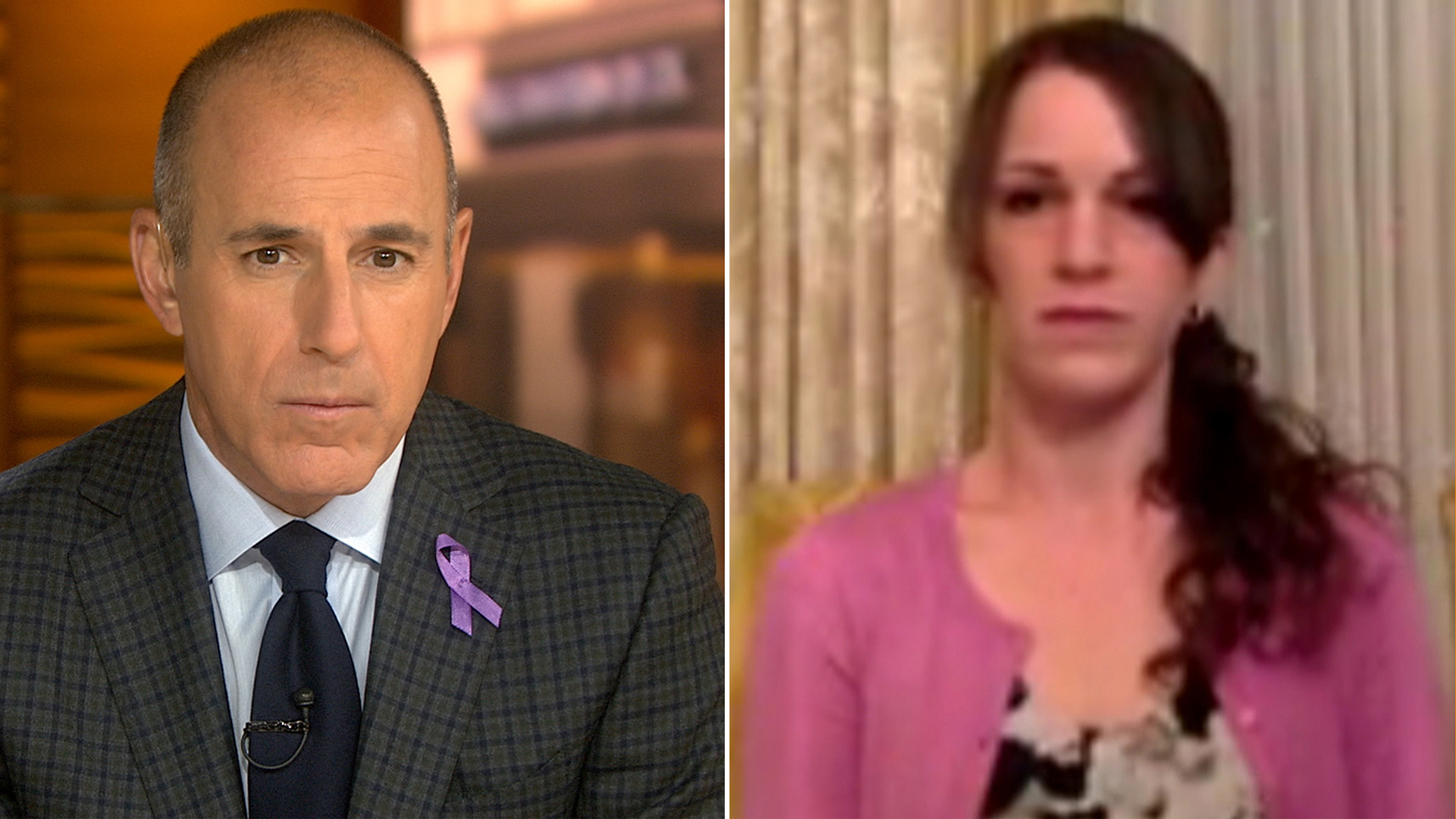
Watch the video below. Texas Presbyterian nurse Briana Aguirre who treated Ebola stricken colleagues announced publicly that her protective outfit had rips, as well as gaps in it – exposing body parts to the potentially deadly Ebola virus. She claimed that hospital administration ignored her concerns when she brought it to their attention, and she was given no Ebola training. Briana Aguirre has received praise from colleagues and the media for going public with this information, as well as harsh criticism for being a “whistleblower” from other colleagues and the media.

In your opinion, did Briana Aguirre act ethically or unethically in going public with this information? Should she be fired from the Texas Presbyterian hospital? Support or challenge Briana Aguirre’s decision to go public with this information.

Full interview: Matt Lauer and Dallas nurse Briana Aguirre

http://www.today.com/offsite/today/56243958

Read Chapter 22 and Chapter. 11 in The West Guide to find the answers.

chapter 22 assignment

Use West Guide pages 385-393 and 399 (345-351 in old book) to guide you in answering the following questions.

1,What does the following in text citation mean if you see it in an essay? (35)

2,If you see the above citation in an essay, what can you expect to find on the essay’s Works Cited page?

3,A citation in MLA format goes at the end of the sentence in which the source was cited. Does it go before the end punctuation (usually a period) or after it?

4,What does the following citation mean? (Jones 136-39, 145)

5,What does this citation mean? (Taylor 54; Thomas 327)

6,What information do you cite in your in-text citation if there is no listed author?

7, List three of the citations in the sample Lolita essay and explain what each one means.

Example:

(Thomas 327)

This means that the source was written by someone with the last name of Thomas and that the quote or paraphrase came from page 327.

8, What does the abbreviation et al. mean?

9,What does the abbreviation “Ed.” mean?

10, True or False (Circle one): A Works Cited page should be alphabetized.

11, Which lines get indented in a Works Cited page?

12,What word must appear in the citation if it is from the internet?

13, What word must appear in the citation if it is from a print book?

Chapter 11 assignment

1. What is a thesis statement?

2. What are the 4 characteristics of an effective thesis statement?

3. True or False (circle): A good thesis statement always states an indisputable fact.

4. What is the difference between an idea and a point? Give an example.

5. Fix the following sentence to make it an effective thesis statement:

This essay is going to explain why Coffee Bean has dominated the brewed coffee industry.

Extra Credit question

how comfortable do you feel with
the concept of the thesis sentence? Is it something you have learned
before in high school or another college class? Sometimes professors use
different words for thesis, like “main claim” or “argument.”

Writing literature review

Guidelines:

1- Write literature review on this topic (helping children with autism to succeed at elementary public schools in the US).

2- Review the studies by going from the general to the specific and contrasting the studies or finding similarities among the research studies.

3- This literature review needs to be at least 20 pages long with 20 references.

4- Most of your sources should be of journals, you can use books (no more than 2) and websites (no more than 3).

5- Check how old the research studies can be.

6- Obtain only primary sources if possible. Cite secondary source only if it is extremely hard to obtain primary source.

7- Use encyclopedias and reference on a topic to locate well known researchers. Read their work and cite them. It is always powerful to cite big names (as long as their articles closely relate to the topic you are researching).

8- Use quotes sparingly. If you do, use quotes only when the wording of the citation is extremely important. Keep the quote as short as possible. After the quote indicate in parentheses the page number of the source where the quote can be located.

9- Remember to use the APA style (6th ed.) format when citing your references.