W2 Artwork Review

Answer all three of the following questions per work of art shown below. You should reference your book to aid you in answering these questions. Answers should be in essay format, be a minimum of three-five sentences each, and include at least three terms from the glossary for each work..

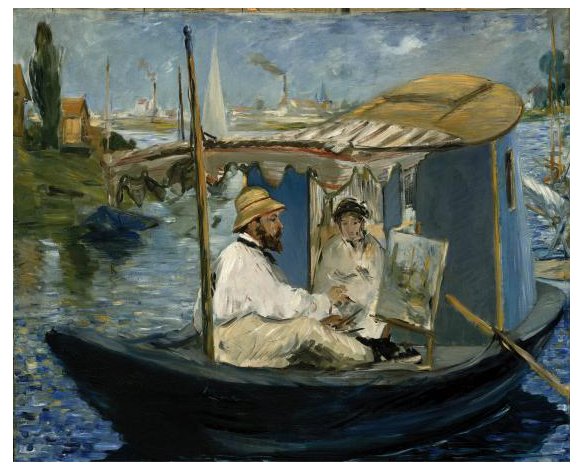
  1. “Claude Monet painting in his Studio Boat,” by Edouard Manet (1874) (Kleiner, fig. 28-2*B* p.843).

    • How does this work follow the Impressionist style?
    • What painting technique did the artist use?
    • What social issues does this painting address?
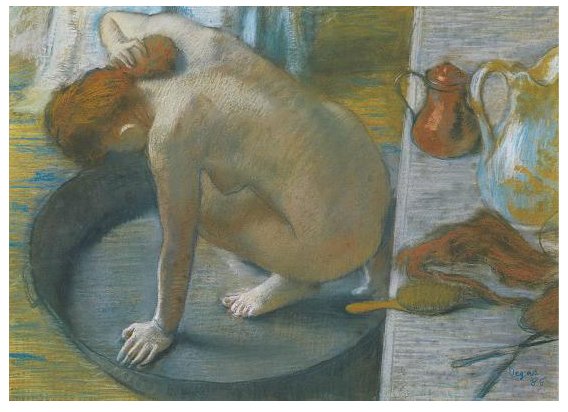
  1. “The Tub,” Edgar Degas

    • What formal quality did this artist explore?
    • How did his medium contribute to the appearance of his work?
    • What Modernist interest does he investigate?
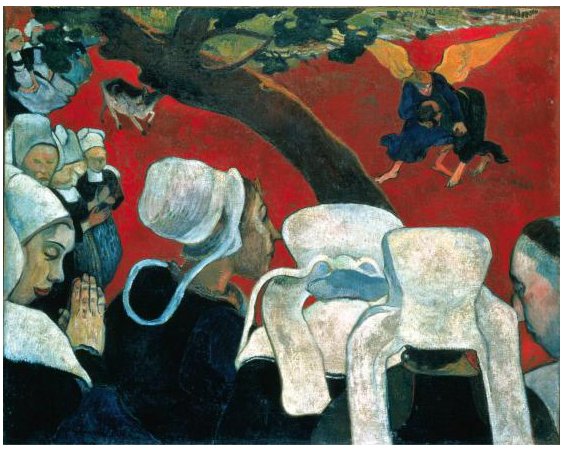
  1. “Vision after the Sermon,” Paul Gauguin,

  • What fundamental differences exist between Gauguin and the Impressionists?
  • Why did Gauguin move to Pont-Aven?
  • How does he reject both Realism and Impressionism in this painting?

Collorirating with the community 4 questions 1 page min.

This week, the additional reading examines the development of community partnerships as a way to not only better the environment but also the Human Services professional. It highlights how working in and with a community exposes the professional to betterment action and personal growth.

Read the article attached

As you read the article, reflect on the following questions:

  1. What is the role of community collaboration as it pertains to Human Services program effectiveness?
  2. The case study within the article describes Human Services students working within the community and how doing so increases their self-efficacy. How would this translate if it discussed the work Human Service organizations do within a community? What are the benefits for the organization?
  3. How can using a systems approach to Human Services work impact an organization’s community reputation?
  4. The article mentions the importance of self-efficacy for the Human Services professional. What does this mean to you?

Include your answer to each numbered question in a Word document. The focus for this assignment is on the quality of your answers, not how they are formatted.

References

Warner, B.E. (2014). Utilizing community practice experiences to build self-efficacy in future human service professionals. Journal of Human Services, 34(1), 190-196.

Social Psychology Research

There are many psychological approaches to addressing social problems (e.g., clinical, developmental, cognitive, phenomenological, neurobiological, behavioral). The social psychological approach is only one among many. Given that this is a social psychology course, your task is, therefore, (1) to review the social psychological literature that pertains to a given social problem of your choice; (2) to identify gaps in that literature that need to be studied; and (3) to identify a potential research question that needs to be studied so that you may add to the literature and advance knowledge that can benefit society.

The Assignment (7-9 pages)

  • Select and describe a social problem in your field of interest.
  • Explain why you selected the social problem.
  • Research at least five journal articles related to the social problem.
  • Describe two gaps in the literature related to the social problem you selected in which you could develop further research and justify your selection.
  • Through a social psychology lens, develop a research question that a social psychologist might use to conduct research.

English prog test 2

PLEASE CHECK ATTACHMENT FOR FULL PAPER.

____ 1.

____ 2.

____ 3.

____ 4.

____ 5.

____ 6.

____ 7.

Which of the following lines from “The First Seven Years” hints at how Feld feels following his epiphany?

  1. “The shoemaker . . . lapsed into silence.”
  2. “He went slowly down the stairs . . .”
  3. “. . . once outside, . . . he walked with a stronger stride.”

True or False: Flannery O’Connor is the author of the quote “He started to shout, Remember, you said five
minutes! But one of Roy’s friends was looking up at the fire escape. John looked down at his schoolbook: he
became engrossed again in the problem of the locomotive.”

  1. True
  2. False

When the neighbor in “Mending Wall” tells the speaker of the poem that good fences make good neighbors,
what does he mean?

  1. He doesn’t want to get to know the speaker any better.
  2. He doesn’t want the speaker on his property.
  3. He has had problems with other landowners in the past.

The hero’s quest is one type of archetypal plot. Certain elements appear in all quest tales. Which element of
the hero’s quest from “A Worn Path” is represented by Phoenix joking about dancing with the scarecrow?

  1. The hero receives a benefit that is used to help others.
  2. The hero finds the object for which she is searching.
  3. The hero overcomes tests and obstacles.

True or False: Robert Frost is remembered as an urban poet, while Carl Sandburg commonly favored
pastoral settings in his poetry.

  1. True
  2. False

The “somebody” in the poem “Filling Station” is a person who provides what to the life of the station?

a. small touches of beauty and caring
b. cooking and cleaning and household errands
c. manual labor on a par with the father and sons

At the beginning of “The Jilting of Granny Weatherall,” how does Granny react to Doctor Harry’s presence?

a. She treats him with great respect.
b. She refuses to acknowledge that she is not well.
c. She thinks he is too old to be a doctor.

____ 8.

____ 9.

____ 10.

____ 11.

____ 12.

____ 13.

____ 14.

The hero’s quest is one type of archetypal plot. Certain elements appear in all quest tales. Which element of
the hero’s quest from “A Worn Path” is represented by Phoenix needing some medicine for her grandson?

  1. The hero’s journey symbolizes the journey through life.
  2. The hero is on a quest to obtain something of value.
  3. The hero receives a benefit that is used to help others.

True or False: A “hero’s quest” is an archetypal plot that features a hero who overcomes obstacles, often
with the aid of others and often at great sacrifice.

  1. True
  2. False

In describing the explorer’s search for peace in the first stanza of “The Explorer,” Brooks repeats the word
“somewhere.” This repetition implies that the explorer’s search is

  1. unfulfilled.
  2. successful.
  3. exciting.

The line “ . . . his figure formed a crooked cross,” from “The Life You Save May Be Your Own,” contains
which type of literary device?

  1. simile
  2. apostrophe
  3. symbolism

What is the meaning of the story of the boy who drowned in “The Rockpile”?

  1. The boy had never liked the river.
  2. The river was a sinful place to go.
  3. The neighborhood is a place of danger.

Interdisciplinary Communication

Assessment Instructions

Imagine you are part of an interdisciplinary health care team in your organization. Although the team has been working together for several months, communication between members is not always efficient or effective, and the situation has become stressful for everyone. The team leader asks you to develop a presentation for the team that addresses the issue.

Preparation

Search the Capella library and the Internet for scholarly and professional peer-reviewed articles on communication. You will need at least three articles to use as support for your work on this assessment.

Directions

Create a 6–8-slide PowerPoint presentation to examine the communication issue and the risk it creates for positive health care outcomes.

  • Describe the types of communication barriers that occur within an interdisciplinary team.
  • Explain how the communication barriers can impact patient safety and health care outcomes.
  • Recommend specific evidence-based strategies to improve communication within the team.
  • Explain how the strategies will benefit team members and patients.

Use the notes section of each slide to expand your points and cite your supporting evidence. Also, include a title slide and a reference slide that lists the resources you used in this assessment.

Additional Requirements

  • Use APA format for citations and references.
  • Be creative. Consider your intended audience.

Suggested Resources

The following optional resources are provided to support you in completing the assessment or to provide a helpful context. For additional resources, refer to the Research Resources and Supplemental Resources in the left navigation menu of your courseroom.

Capella Resources
Capella Multimedia

Click the links provided below to view the following multimedia pieces:

SHOW LESS

Library Resources

The following e-books or articles from the Capella University Library are linked directly in this course:

Course Library Guide

A Capella University library guide has been created specifically for your use in this course. You are encouraged to refer to the resources in the BSN-FP4002 – Assessment, Communication, and Collaboration Library Guide to help direct your research.

Internet Resources

Access the following resources by clicking the links provided. Please note that URLs change frequently. Permissions for the following links have either been granted or deemed appropriate for educational use at the time of course publication.

Bookstore Resources

The resources listed below are relevant to the topics and assessments in this course and are not required. Unless noted otherwise, these materials are available for purchase from the Capella University Bookstore. When searching the bookstore, be sure to look for the Course ID with the specific –FP (FlexPath) course designation.

  • Clark, C. C., & Paraska, K. K. (2014). Health promotion for nurses: A practical guide. Burlington, MA: Jones & Bartlett.
    • Chapter 3.

Health information Management

Case Study

You are the director of health information services at Anywhere Hospital. As part of its new employee orientation, the hospital asks each department director to describe to the new employees the services offered by that department and the responsibilities of managers and staff. You have been asked to include as part of your description an explanation of diagnosis-related groups. Describe what you would include in your explanation.

Things to Consider

Your explanation of DRGs should include multiple points. You should begin with an explanation of how DRGs are used as part of a prospective payment system, explain the statutory authority that established their existence (TEFRA), and describe their purposes. You should address the differences between MDCs and DRGs, and describe how a decision tree works. At least 250 words

Can someone write a short response to the following?

The wrong theme for Western narratives since 1960 involves the hero as a professional. Typically this meant that he (always a he until very recent years) would be a town sheriff or a U.S. Marshall, possibly an officer in the Cavalry, or just as often, a professional gunslinger. Since the 1960s the modern western depicts this professional hero as the Captain of a starship, a lawman chasing a serial killer through the modern western landscape, or as the captain of a group of renegade heroes fighting an empire of some sort (Star Wars, Firefly). Your question is twofold:

1. Which depiction, lawman, soldier, gunslinger or outlaw, do you think works better for the western narrative? We are all accustomed to the old saying about westerns with the good guy in the white hat and the villains in the black hats. This adage has not really applied since the 1940s. Note how outlaws have been made into cultural heroes as well as the discussion of heroes as a variety of good guys trying to do the right thing.

2. What does the placement of modern westerns in the present or out in space do to/for the western narrative? Do these modern narratives give the hero greater latitude in the use of violence?

Read Description .

Assignment Description
There’s an old adage that says that history is always written by the winners. Although this is not always the case, it is true that people’s sense of historical events is often influenced by the viewpoints of the historians who write about them.
During the Watergate scandal in 1974, many policy pundits wrote columns demanding that President Richard Nixon resign from the presidency because he was, in their view, clearly culpable for the Watergate break-ins. Not all pundits felt this way, however. ***Read articles that offer differing views of President Nixon at the height of the Watergate scandal.
Use the attached template to complete the following for this assignment:
• Two Approaches to Watergate: Summarize the arguments made in each of the two articles regarding the conduct of President Nixon. How might each of the author’s views impact the reader’s understanding of the Watergate crisis?
• Changing Views: Describe how the Watergate events changed American views toward politics and politicians. In your view, how did these events change the press coverage of politicians?
• Impact of Technology: Speculate about how the Watergate event coverage might have been different (better or worse) in the age of social media and smartphones. Would it have lasted as long? Why or why not? Are these innovations in technology helpful or harmful to the way that people understand current events?
At least 2 credible sources are required for this assignment, in addition to the 2 articles offered for a total of 4 sources. Your sources should be cited using APA format; both in-text citations and references. Please use the CTU Undergraduate Writing Style Guide for assistance on APA formatting.
References
Burch, D. (1974, May 14). In defense of Richard Nixon. Retrieved from The Harvard Crimson Web site: http://www.thecrimson.com/article/1974/5/14/in-defense-of-richard-nixon-pithe/
The Washington Post. (1973, May 1). Editorial: Watergate: The unfinished business. Retrieved from http://www.washingtonpost.com/wp-srv/national/longterm/watergate/articles/050173-2.htm

Family Care plan using

  1. Based on your family and community systems assessment that you completed in Modules Two and Three, develop a family care plan using the Family Care Plan Templateto continue to address either your family or the family from the TV show or movie that you recently examined. Identify the family’s needed resources, strategies, interventions, and expected outcomes.
  2. As you will be required to create family and community care plans for the Riverez family and the community in which they reside as part of your final project, this task will be used to support you in the successful completion of your final project. Note that the Family Care Plan Template provides prompts to guide you through its completion. For additional details, please refer to the Module Four Activity Guidelines and Rubric in the Assignment Guidelines and Rubrics section of the course.

**PLEASE GOLLOW ATTACHED GUIDLINE**

i need help with homework

Begin the Case Assignment at Dazed and Confused: General Education vs. Career Specialization.

Case Assignment

Reflection Questions

  1. If Melanie decides to get a technical certificate and not pursue a college degree, how do you see it affecting her future:
    1. in the short run, and
    2. in the long run?
  2. Do you see any way Melanie might strike a balance between pursuing
    her career interest and obtaining her college degree so that she could
    work toward achieving both goals at the same time?
  3. Can you relate to Melanie’s story in any way, or do you know anyone else who is having a similar experience?

Assignment Expectations

After reading Chapter 1 in Thriving at Trident University,
answer the reflection questions from Dazed and Confused in detail and
in question-and-answer format. Each answer should be at least TWO
paragraphs (4 or 5 sentences per paragraph); provide examples to support
your opinion to earn full credit. Utilize information from the chapter
as well to support your opinion. Review the grading rubric before
submitting the assignment, to ensure that you have met all requirements.
When you have finished, upload the document to the Case 1 Dropbox.