Com easy post reply 4

he three codes in the Florida Sheriffs Youth Ranches, Inc. Professional Code of Ethics that I believe are essential are as follows: 1) Treat all people with dignity and respect, avoiding any form of discrimination and harassment. 2)Uphold the highest standards of truthfulness and honesty in all professional endeavors. 3)Comply with all applicable laws and regulations. I feel that if you treat everyone with respect, are honest, and abide by the rules that you will not only be successful, but you will earn the respect of your peers. Most employers value honesty and integrity, whether they are consciously thinking about the code of ethics or not.

Agree or Disagree within 2- 3 sentences

To present your review and critique of a special issue in OD (Chapters 19-28 in POD4).

In this forum, please post three selections of the following chapters you would like to cover from the POD4 textbook from Part Four (Chapters 19-29).(Practicing Organization Development: Leading Transformation and Change, 4th Edition (2016) by William J. Rothwell, Jacqueline M. Stavros, and Roland L. Sullivan, Hoboken, NJ: John Wiley and Sons, Inc. ISBN: 978-1-118-94770-8. [POD4])

First Come First Selected (19,20,27,26,30 have been selected by other students).

Here is an example:

My three choices:

Chapter 27 – The Global Organization Development Professional – I am about to travel to Italy for the 3rd time in four years for a work assignment. I have also travelled to Canada three times. Globalization adds new opportunities to drive impactful change while being sensitive to cultural differences.

Chapter 24 – Positive Organizational Ethics – The news today is dominated by questional ethics and human conduct and this would be an interesting chapter to present to the class.

Chapter 20 – Organization Change that Transforms – Bringing life to strategic change to maximize competitive advantage would also be interesting to research and present.

Executive Brief/ Healthcare Adm Leaders and the Public Policy Process/Addressing Stark and Anti-Kickback Statutes

Part 1:

Create an 8-10 minute presentation of the Executive Brief attached. This presentation should be developed from the perspective of a healthcare administrator who is providing a recommendation to the Board of Directors.

PART 2

QUESTION 1: For the field of healthcare administration, healthcare leaders and administrators may contribute to the public policy process by advocating for and implementing policy changes to enhance delivery goals for an HSO while also benefitting the HSO’s patient population. Yet, within the public policy process, how do healthcare leaders best engage in the process?. There are four steps in the public policy process: 1) identifying a problem, 2) formulating a policy, 3) implementing the policy change, and 4) evaluating the result. While the steps identified here are simplified, they do present a cycle or sequence that healthcare administration leaders may act upon to influence public policy. Consider how healthcare leaders might have contributed to the public policy that brought about the Patient Protection and Affordable Care Act (PPACA). DESCRIBE in 2 or 3 paragraphs how a healthcare administration leader might influence the public policy process to the advantage of a health services organization or other professional association. Be specific and provide examples.

QUESTION 2: As you have examined this week, Stark and anti-kickback statutes are in place to ensure that health services organizations are in compliance for engaging in fair and equitable business practices. While adherence to these statutes is not necessarily different for a wide variety of organizations, healthcare administration leaders must be careful to ensure that healthcare delivery and health services are made available and delivered in a fair and legal manner. DESCRIBE in 2 or 3 paragraphs Stark and anti-kickback statutes for compliance within your health services organization. Then, describe what statutes you might address from compliance perspective as a current or future healthcare administration leader. Be specific and provide examples. Explain how your efforts to comply with these statutes address safe harbors and be specific about their relevance for your health services organization.

RESOURCES:

Furrow, B., Greaney, T., Johnson, S., Jost, T., & Schwartz, R. (2013). Health law: Cases, materials, and problems (7th ed.). St. Paul, MN: West Academic Publishing.

  • Pages 639–698

Singer, T. G. (2013). Antitrust implications of the affordable care act [PDF]. Journal of Health and Life Sciences Law, 6(2), 1–18.

6 Short responses assignments

There will be 6 small essay of one single-spaced page analysis of the readings.

1, Topic Deindustrialization, Gendered Work, and Working-Class Conservatism

Reading: “‘Vigorously Left, Right, and Center at the Same Time:’ The Crosscurrents of Working‐Class America in the 1970s.” by Jefferson Cowie in America in the Seventies, eds., Beth Bailey and David Farber. (Lawrence: University Press of Kansas, 2004), 75-106.

“‘A Spontaneous Loss of Enthusiasm’: Workplace Feminism and the Transformation of Women’s Service Jobs in the 1970s,” by Dorothy Sue Cobble in International Labor and Working-Class History 56 (Fall 1999): 23-44. [16 pages] [google for pdf.]

https://smlr.rutgers.edu/sites/default/files/documents/faculty_staff_docs/Cobble_Spontaneous_Loss.pdf

2. Topic Race, Gender, and Globalization since the

Reading: “What Has Happened to the Labor Movement,” by Dan Clawson and Mary Ann Clawson in Annual Review of Sociology, 25 (1999): 95-119.

“The Politics of Labor and Race in the USA,” by Bill Fletcher, Jr. and Fernando Gapasin, in Socialist Register, Vol. 30 (2003), p. 245-264

3. Topic Race, Gender, and the Cultural Economy

Reading: Artland Labor Reading

4. Topic Environment, Inequality, and Capitalism

Reading: “United to Win: Labor-Environmental Alliances, by Dan Jakopovitch in Capitalism, Nature, Socialism, 20(2), 74-96. 2009.

“What Every Environmentalist Needs to Know About Capitalism,” by Fred Magdoff & John Bellamy Foster, Monthlyreview.org (7 March 2010), http://www.countercurrents.org/foster070310.htm

5. Topic Food: Gender, Race, and Nationality at Work

Reading: “Return to the Jungle: The Rise and Fall of Meatpacking Work,” by Daniel Calamuci in New Labor Forum, 2008, 17(1): 67-77.

“Inside a Poultry Processing Plant: An Ethnographic Portrait,” by Steve Striffler in Labor History 43(3):305-313. August 2002.

“Food Fight: The Politics of the Food Industry,” by Kristin Wartman in New Labor Forum, Fall 2012, 21(3): 75-79.

Communication Assignment

PART 1 :

Personal Organizational Communication Experience

Consider your own personal environment as related to organization communication. That most likely implies your job and work environment, but might also include organizations you are affiliated with outside of work.

Write a paper (likely 1–-2 pages in length) describing the organizations you are involved with, and how organization communication impacts the effectiveness of those organizations. End with a statement describing what interests you the most about the subject of organizational communication.

APA FORMATT!!!

PART2:

The Human Communication Process

Choose a communication situation you recently experienced at your workplace or other organization you are affiliated with. Use the human communication process described in your text, starting on page 11, “Human Communication: Message and Constitutive Processes,” to analyze why—or why not—a shared reality was experienced as an end result. Summarize your experience and include your analysis as an attachment in this assignment thread. Consider the following items in your analysis:

  • Identify the source and the receiver.
  • What was the message and what type of message function was it serving?
  • How was it encoded?
  • How was it decoded?
  • What channel was used to transmit the message?
  • What type of noise was experienced?
  • Comment on the competencies, fields of experience, and culture of the participants involved.
  • Identify the communication context of this situation.
  • What was the intended effect versus the actual effect of the message?
  • Was a shared reality constructed? If not, what needed to change?

Text on page 11:

Human Communication: Messages and Constitutive Processes

When John and Mary construct their shared realities, they engage in what we call the human communication process. Both John and Mary serve as sources and receivers of messages. Both engage in message encoding and decoding and in selecting verbal and nonverbal channels for message transmission. Both are influenced by their individual competence and their perception of the competence of the other. Each brings to the exchange a different set of experiences, and each may view the context of their interaction differently. Thus, all their messages are subject to distortion or noise. The effect, or what happens between John and Mary, is a result of the complex interaction of all these elements. John and Mary are literally constituting or bringing about the reality of their relationship.

Monthly Status Reports

Assume you are the project manager for a software company, and your team is in charge of delivering an update to tax preparation software for the next tax season. The project team has ten software developers working together, but located across the country. You have the following information about the project, and need to provide a status to the sponsors. Please write a one page status report to the sponsors, providing a clear indication of status of the project. (suggestion Red, Yellow, or Green for status). The sponsors also like to only know the two most important risks, and what could be done to mitigate the risk if it happens. The conclusion of the status report must describe any requests for additional resources, if they are necessary.

New items you learned this month about the project:

  • There is a three day weekend in the coming month
  • Nine of the developers are on track to finish their tasks 2 weeks early.
  • One software developer took the recently announced “early retirement” package, and is leaving in one week. He is confident he will be able to finish his piece of the work before he leaves.
  • It is hurricane season in Florida, where three of the developers are located.
  • The developer who is retiring is the only person who knows how to get approval for the final product from the IRS.
  • The project costs are under budget and there has been no need for overtime.

Provide a one page monthly status to the sponsors, in APA format.

The IEP Process

Part 1: Summary

Review the “FIEP: A Facilitated IEP Meeting” video from this week’s readings. In a 500-750 word summary, address the following:

Identify IEP team members, by title, who are:

  1. Mandated to be present under IDEA; and
  2. Are optional under IDEA.

Describe the required sections of an IEP, explaining what each section addresses and how it relates to the education of the individual with exceptionalities.

Part 2: Checklist Reflection

Review the “IEP Checklist” resource from this week’s readings. Pay specific attention to the “Interactions, Participation, & Communication” and the “Method of Decision Making” sections, while keeping the CEC Professional Ethical Principles in mind.

In 250-300 words, reflect upon the “FIEP: A Facilitated IEP Meeting” video, sharing observations in relation to the aforementioned sections of the “IEP Checklist” document.

  1. What are some of the items from the checklist in the two identified sections that you saw in the video’s mock IEP meeting?
  2. What skills from the checklist do you think might be difficult for you to perform?
  3. What could you do to help develop those skills that might be difficult for you?

Submit your summary and checklist reflection as one deliverable.

Art Response

Homework 1

In Chapters One and Two we covered general ideas and terminology about art. In Chapter Four we will cover the formal elements of art in depth. The first element is LINE.

1. Before you start you will need to read Chapter 4 – especially the part that deals with LINES in art and view the presentation.

2. Choose one painting or drawing from the book (not from Chapter 4) and post it with your response. Please include the name of the artist, the title of the work and the date in which it was created. (I chose the one below)

2.1

Vincent van Gogh. Wheat Field and Cypress Trees. 1889. Oil on canvas, 2812 × 36″.

The National Gallery, London

3. Describe the lines in that work.

  • Are they continuous or broken? straight or wavy? Organic or geometric? Round or angular? Thin or thick? Of constant width or of freely varying widths? Are there any contour lines in the work? etc.
  • Do you see actual lines/linear forms/lines formed by edges/implied lines? Where exactly do you see them?
  • Describe the direction and movement of the lines. Are they horizontal, vertical, diagonal lines?

Optional – explain how the form (lines) affect the content – meaning of the work.

Example

Related image

Theodore Gericault, Raft of the Medusa, 1818-1819

Description of the lines –

Most of the lines in the work are organic and not straight – representing human bodies and the sea and sky. Few geometric straight lines represent the wood of the raft and the ropes.

Most of the lines are not actual lines but lines created by either linear shapes such as the arms and legs of the people, or formed by edges – for example between the sea and the sky there is a straight line that is created by the two different colors.

There are very few contour lines – such as between the leg of the person lying on the front right on top of a wood beam. Those contour lines are thin.

Most of the lines are diagonal, with the exception of the line of the horizon to the right of the raft which is horizontal. There are many lines in the center of the composition that seems to be going in different directions. Many lines are implied lines – create by a few objects leading the eye to the same direction. For example the body of the dead person on the bottom left create a diagonal line that is continued by the hand motion of the person in the center of the raft that lifts his arm in the same direction.

Homework 2

1. Read Chapter 4 – especially the part about light, and view the presentation.

2. Choose one work of art – either from the text book or another source. You may take a photo by yourself and upload it if you wish, or use your own artwork if you have one. You have to choose a work that uses light in a significant way (therefore if you see a work of art that has no reference to light – please do not choose it). If you choose a work from the textbook please do not use the examples that are given to the topic of light.

3. Attach the picture of the artwork and include the name of artist, title, date.

4. Describe the use of light in the work.

  • Is the light an actual light like in Doug Wheeler’s installations? Image result for doug wheeler installation
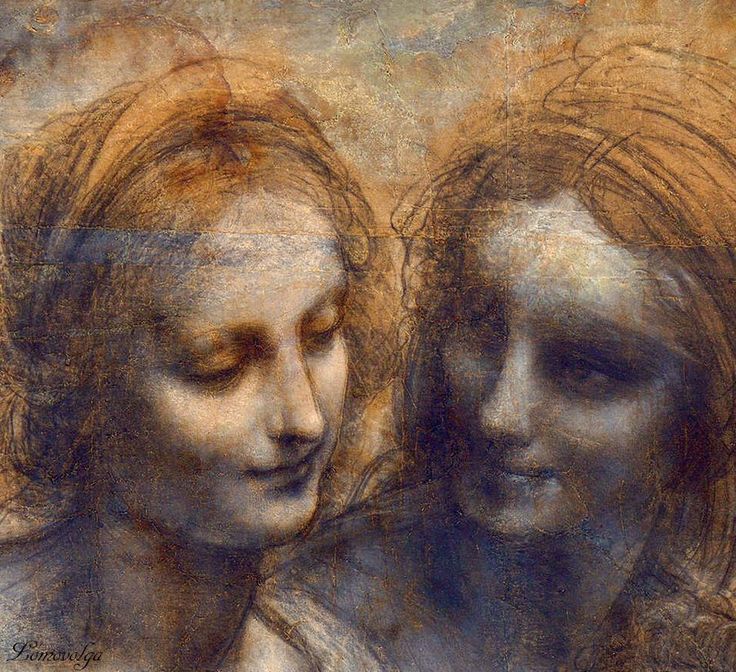
  • Or is it an implied light like in this details from Leonardo’s “Virgin and St. Anne…”? Image result for leonardo virgin and st anne
  • If it’s an actual light ask yourself – what and where is the source of light? Is it bright, dim, colorful? is it constant or blinking? One source or many? What is the relationship with the viewer (above, in front etc.). What is the relationship with the space (indoor or outdoor, small space or large? type of space? etc.) How do you think it affects the viewer?
  • If it’s implied light ask yourself – Where is the light in the picture coming from? How many sources? Inside or outside the picture? Artificial or natural light? Can you describe it as a chiaroscuro? What is the purpose/s of the light? (modeling, emotional or symbolic effects, compositional, directing the eye etc.)

Discuss factors that may affect current and future performance of the chosen company.

Chosen Company – Carnival Corporation – http://www.carnivalcorp.com/

In this report, you will discuss factors that may affect current and future performance of the chosen company. Based on what you know about the organization’s
financial health and performance, you will then forecast future performance of the company for each of the next three years.
Prompt: After having evaluated the company’s financial health, you should research and assess the company’s strategic priorities and behavior. You should
investigate internal risks and non-monetary factors that may affect current and future performance and decisions. To justify your findings and projections, you
will need to produce accurate and relevant data tables, explaining how the numbers were informed by existing information and modeling different scenarios.

Only answer if you have the book!

BOOK REQUIRED: Brinkley, Alan.American History: A Survey. Volume I. 13th edition. New York:McGraw Hill, 2009.

In our Week 1 Introduction Discussion many of you posted that you wanted to learn more about the Civil War and its aftermath.

1) What significant new things (pick 2 or 3 )did you learn? Do not make a list. Describe and explain what you learned.
2) How did your perspective about the Civil War and/or its aftermath change from our study this week?
Make sure you display knowledge of Chapter 14 and 15 and the resources in the Week 6 Module.
Do not make a list. Tell me what you learned by writing about the topic or topics.

Discussion Guidelines–!!

Post should be in your own words.
No outside research except content that is in the Module Week 6 and the text.
Show understanding of the reading for Week 6 and my content comments as you write your posts.

No more than 2 direct quotes per post. Direct quotations should not exceed 1.5 sentences in length.
Do not make a list. Write in paragraph form.

Do not repeat the questions.

Display understanding and in depth analysis.
No direct quotations longer than 1.5 sentences.